
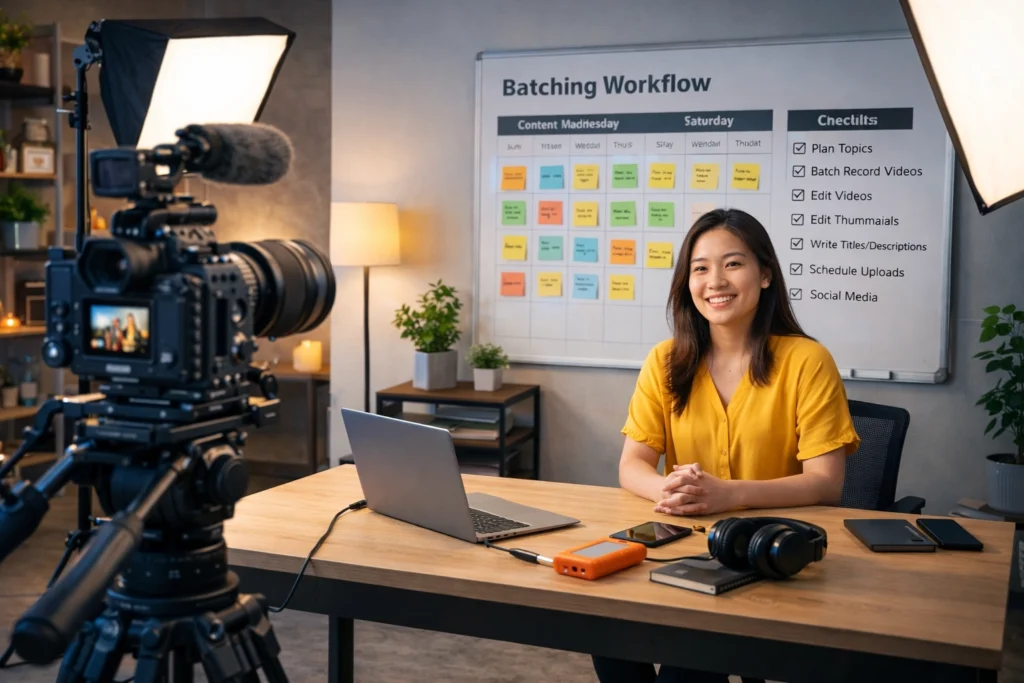
In the current attention economy, consistency isn’t just a "nice-to-have": it’s a survival metric. For small business owners and content producers, the pressure to feed the social media algorithm can feel like a full-time job that doesn't pay. Most creators fall into the trap of "sporadic production": they get an idea, set up their gear, film one video, edit it, and post it. By the time they finish, they are too exhausted to do it again for another two weeks.
At Anibok Studios, we view video production through the lens of practical efficiency. To scale your brand and reach audiences on platforms like YouTube, Instagram, and LinkedIn, you need a system that minimizes setup costs and maximizes output—while consistently solving your audience’s real problems. That system is batching.
Batching video production is the strategic process of consolidating similar tasks into dedicated time blocks. Instead of setting up your lights five times a month, you set them up once and film five videos. Here is our five-step blueprint to mastering the batching workflow and reclaiming your schedule.
Step 1: Strategic Planning and Content Mapping
Efficiency starts long before the "Record" button is pressed. At Anibok Studios, we treat content planning like a problem-solving strategy meeting. You aren't just making "videos"; you are creating repeatable answers to the questions your audience keeps asking—assets that can build trust, community, and eventually scaled sales.
Start by scheduling one "Deep Work" day per month dedicated solely to ideation. During this session, brainstorm 8 to 12 video topics. This ensures you have a full month of content (at 2-3 posts per week) ready to go.
Analyze Your Platform Distribution:
- Vertical (9:16): Focused on high-engagement, short-form storytelling for TikTok and Reels.
- Landscape (16:9): Designed for deep-dive authority building on YouTube or LinkedIn.
By identifying these ratios early, you can plan "multi-purpose" shoots where one core concept is filmed in both formats, or cropped strategically in post-production. This "capture once, distribute everywhere" mindset is the foundation of high-level content economics.
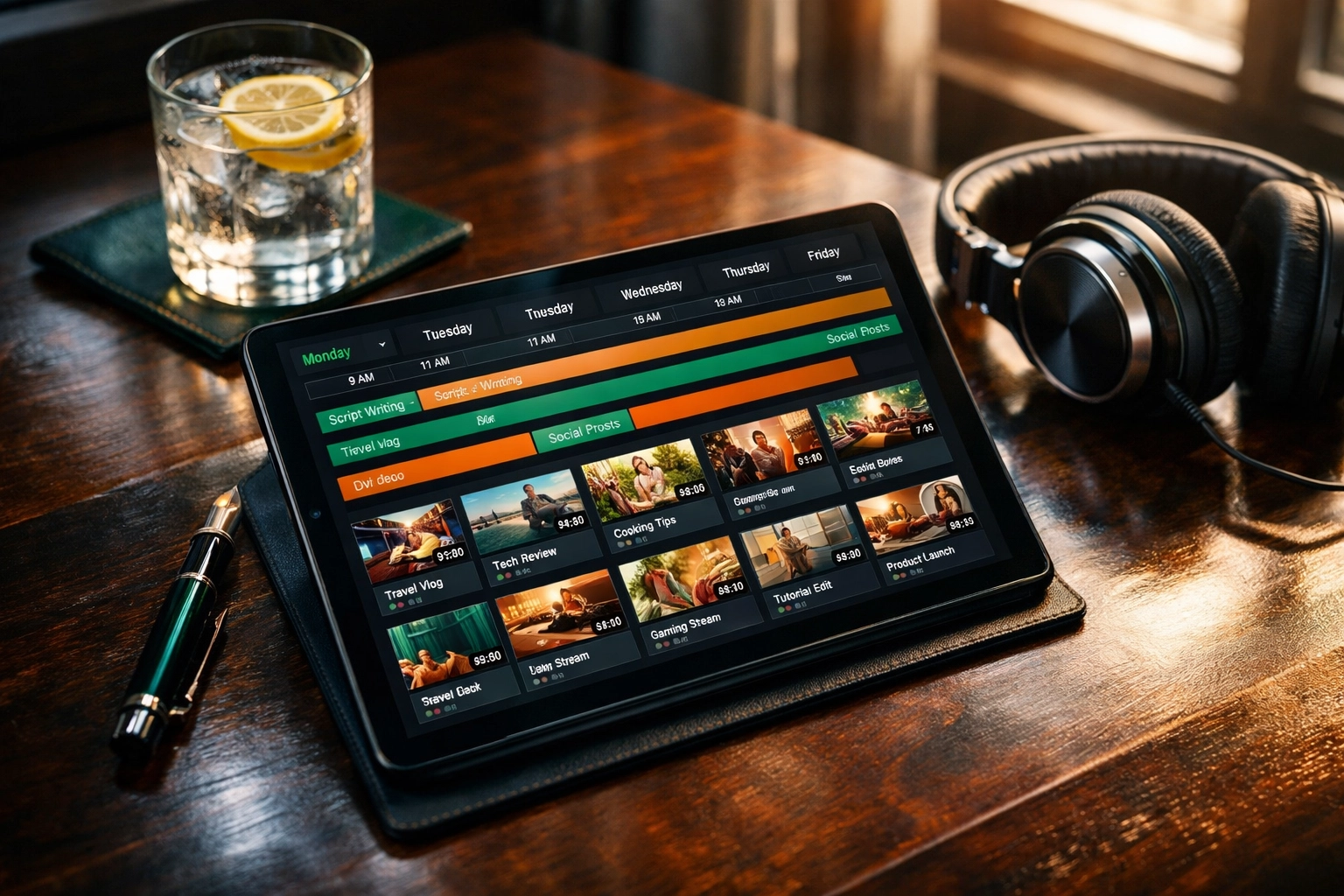
Step 2: The Blueprint: Scripting and Shot Lists
A common mistake in small business video marketing is "winging it." This leads to long-winded takes, excessive "ums," and a nightmare in the editing room. We advocate for a structured script or a robust bulleted outline so every video lands one clear pain point and one clear takeaway.
Scripting for Velocity:
Don't write a novel. Use a three-act structure:
- The Hook: A data-driven or provocative statement to stop the scroll.
- The Meat: Three actionable points or a brief narrative.
- The CTA: A clear directive for the viewer.
Once your scripts are ready, create a Batch Shot List. This is a master document that groups similar shots together. If three of your videos require a "desk setup" shot and two require an "outdoor walking" shot, you film all the desk shots together and then all the outdoor shots together. This prevents the "mental context switching" that kills productivity.
Step 3: Execution: The Production Sprint
This is where the magic happens. Your "Filming Day" should be treated as a high-stakes production environment. Whether you are using a smartphone or a professional cinema camera, the goal is to keep the camera rolling and the momentum high.
The Pro Setup:
Set up your lighting, microphone, and background once. Test your audio levels: bad audio is the fastest way to lose a viewer. If you are filming multiple videos, have a few "costume changes" (a different jacket or shirt) ready to go. This gives the illusion that the videos were filmed on different days, maintaining a fresh aesthetic for your brand.
Focus on "The Loop":
In a batch session, your goal is to stay in the "performer" mindset. Don't stop to check the edit or upload files. Film Video A, take a 2-minute breath, and move straight into Video B. By staying in the zone, you’ll find that your delivery becomes more natural and confident with each successive take.

Step 4: Systematic Post-Production
Editing is often the bottleneck for small businesses. To overcome this, you must stop treating editing as a creative exploration and start treating it as a repeatable process.
The Batch Editing Workflow:
- The Rough Cut: Import all footage and trim the "dead air" and mistakes from all videos at once.
- The Visual Layer: Apply color grades or filters to all clips simultaneously to ensure brand consistency.
- The Text Layer: Use tools to auto-generate subtitles. In 2026, accessibility is non-negotiable: over 80% of social media videos are watched on mute.
- The Final Polish: Add your brand’s logos, watermarks, and background music.
Using templates is a game-changer here. If you have a standard intro or outro, save it as a preset. This turns a 2-hour edit into a 20-minute assembly job.

Step 5: Optimization and Global Distribution
The final step is moving your completed assets into the distribution pipeline. A video sitting on your hard drive has a $0 ROI. To see actual business growth, you need a systematic upload strategy.
Strategic Scheduling:
Use a content management tool to schedule your videos at least a week in advance. This removes the daily stress of "What am I posting today?"
Optimization Checklist:
- Titles: Use SEO-driven keywords that speak to your audience’s pain points.
- Descriptions: Include links to your lead magnets or website.
- Tags: Use a mix of broad industry tags and niche-specific keywords.
The goal is for your content to work for you while you sleep. By batching, you aren't just saving hours; you are building a library of assets that consistently solve audience pain points—creating a loyal community that trusts you, refers you, and converts over time.
Why Batching Builds Community (and Scales Sales)
The economics of attention have shifted. Audiences don’t just want “content”—they want consistent help. When you show up every week solving the same set of real problems (pricing, trust, process, results, objections), you stop chasing views and start building a loyal community.
Batching is how you do it without burning out. It lets you keep professional standards while operating on a small business schedule—and it turns video into a repeatable growth system:
- Consistency builds familiarity
- Familiarity builds trust
- Trust builds conversations
- Conversations build sales

Ready to take your video marketing to the next level?
At Anibok Studios, we help brands produce high-quality videos and build a batching system that consistently answers audience pain points—so your community grows and your sales scale.
Stop wasting hours on inefficient filming. Start batching. Your schedule—and your bottom line—will thank you.