
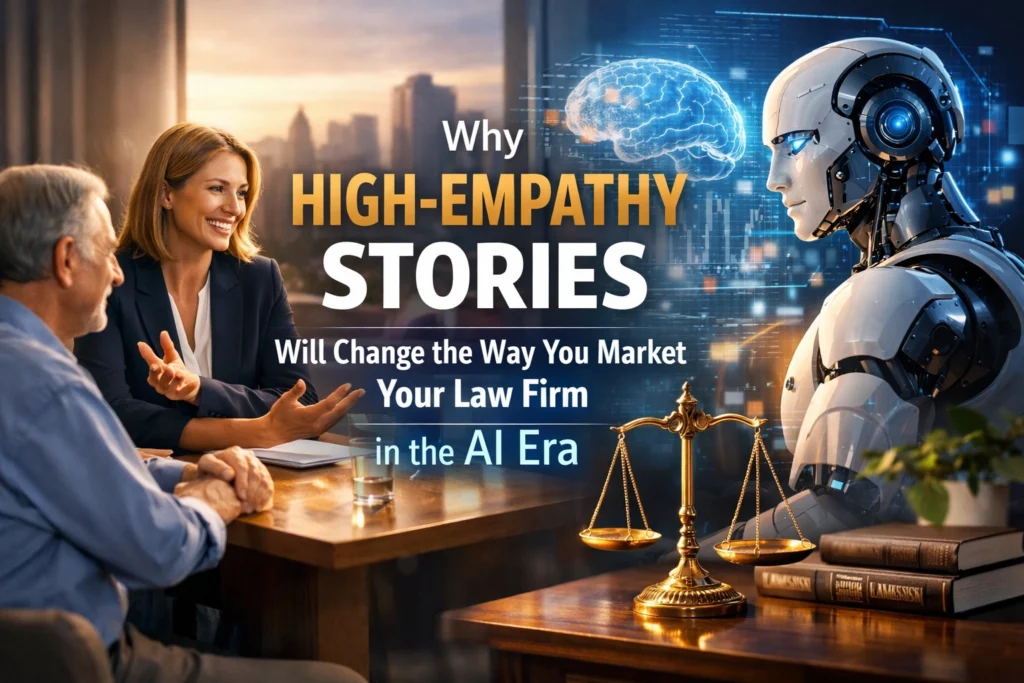
In the current fiscal landscape of 2026, the cost of content production has plummeted toward zero. Generative AI can now synthesize legal briefs, blog posts, and even basic avatars with unsettling efficiency. However, as the volume of content explodes, the market value of "generic information" has hit a historic floor. For law firm partners and decision-makers, this creates a strategic paradox: when everyone can produce "content," no one can command attention.
The legal industry is built on trust, a commodity that AI cannot synthesize. While AI excels at logic and data retrieval, it lacks the biological resonance required to establish a deep human connection. This is where high-empathy storytelling: the kind of cinematic narrative we specialize in at Anibok Studios: becomes the ultimate market arbitrage.
The Commoditization of Professional Authority
Historically, a law firm’s authority was signaled through high-end office real estate and polished professional photography. In the digital era, this shifted to SEO dominance and "thought leadership" articles. Today, AI has commoditized these signals. If a chatbot can write a more comprehensive guide to personal injury law than your junior associate, your written content is no longer a differentiator; it is a utility.
Data suggests that clients seeking legal representation are not looking for the most efficient algorithm; they are looking for an advocate. They are in a state of crisis: be it corporate litigation, personal loss, or family restructuring. In these moments, the human brain prioritizes emotional safety over technical specifications.
Standard marketing videos: the "lawyer behind a desk" trope: fail because they signal a transaction rather than a relationship. High-empathy storytelling flips this script by focusing on the stakes of the human being involved, rather than the mechanics of the law.
Why Empathy is a Technical Asset
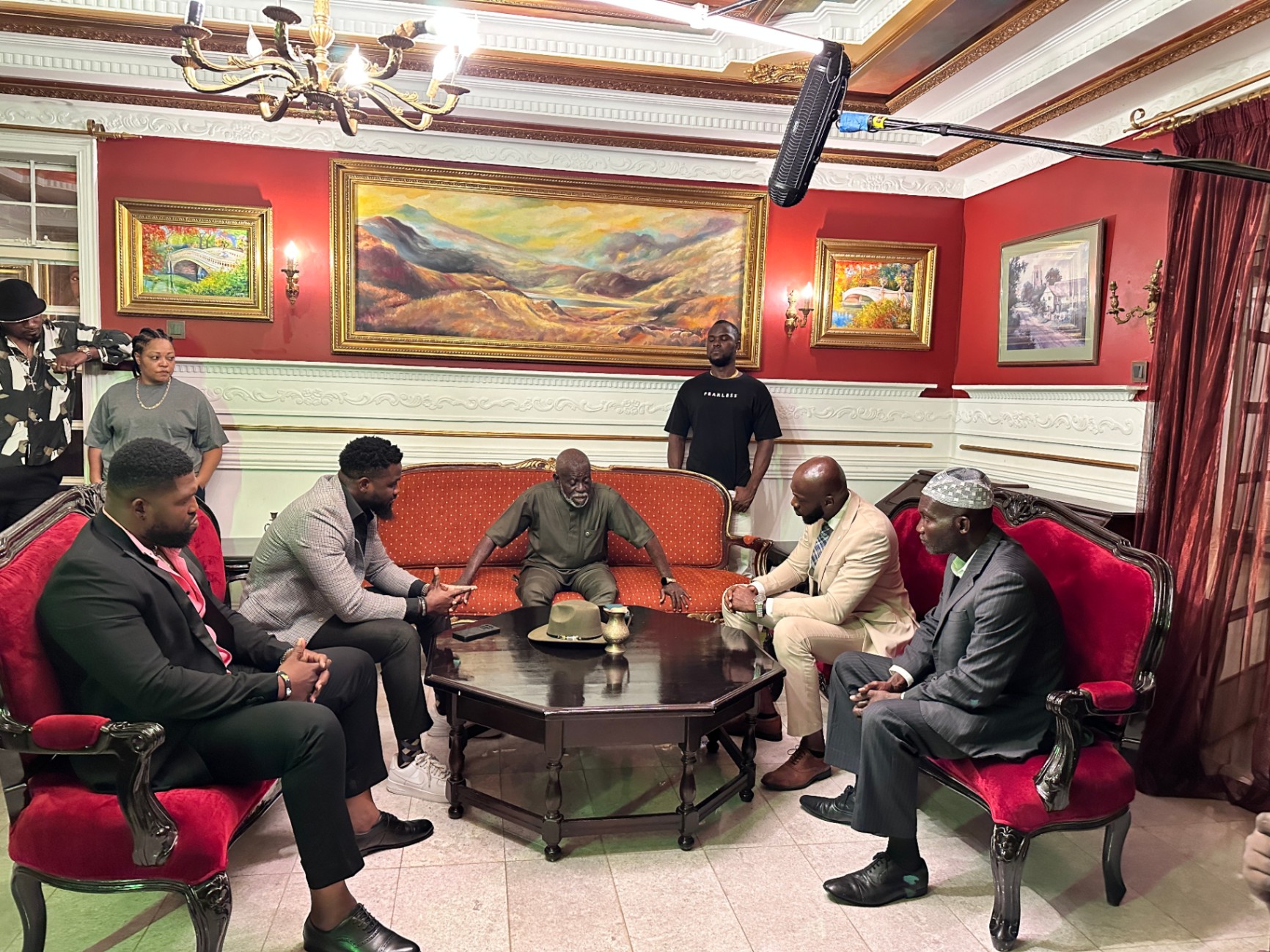
In film production, "empathy" isn't a soft concept; it is a technical outcome achieved through specific lighting, pacing, and narrative structure. When Anibok Studios produces a brand film, we apply feature-level cinematic rigor: the kind that makes a viewer feel something real, fast.
High-empathy stories work because of "Neural Coupling." When a viewer watches a story that resonates emotionally, their brain activity mirrors that of the person in the story. This creates a physiological bond between the potential client and the firm. AI-generated text or stock-heavy videos cannot trigger this response because they lack the nuances of human micro-expressions and authentic environmental textures.
For a law firm, this means moving away from "what we do" and toward "why we protect."
The Strategic Shift: Narrative vs. Information
- Information (The Old Guard): "We have 30 years of experience in maritime law." (AI can say this).
- Narrative (The Industry Powerhouse): A visual journey through the aftermath of a port disaster, focusing on the silence of a closed business and the resilience of the owner, followed by the firm’s quiet, unrelenting presence in the recovery. (AI cannot feel this).
Feature-Level Production Standards: Applying Film Economics to Legal Branding
The market reality is simple: clients and referral partners have a sophisticated "filter" for quality. They can distinguish between a "marketing video" and a "cinematic experience" within the first three seconds.
By adopting the production standards of a feature film, law firms signal that they operate at a higher level of excellence. If your firm’s visual representation is indistinguishable from a budget-tier competitor using stock footage, you are effectively signaling that your services are also a commodity.
Strategic video production is an investment in your firm's "Brand Equity Floor." While short-form, low-fidelity content is excellent for reach, your "Anchor" film must provide the depth and empathy that justifies a premium fee structure.
The ROI of Emotional Resonance
From an analytical perspective, why should a law firm invest in high-empathy stories instead of more Google Ads?
- Higher Conversion Rates: Empathy-driven videos reduce the "friction of trust." A client who feels a connection to your firm’s story is less likely to price-shop.
- Referral Velocity: Stories are shareable; statistics are not. A compelling narrative about how your firm stood by a client becomes a "social currency" that your network can easily pass on.
- Talent Acquisition: Top-tier legal talent wants to work for firms that represent something greater than a billable hour. A high-empathy brand story is your most potent recruiting tool.

Implementation: Moving Beyond the Stock Video Era
To transition your firm into the AI era of marketing, you must audit your current visual assets. If your videos rely on:
- Standard "shaking hands" stock footage.
- Artificial, scripted testimonials that feel rehearsed.
- Flat, overhead office lighting.
…you are vulnerable to being ignored.
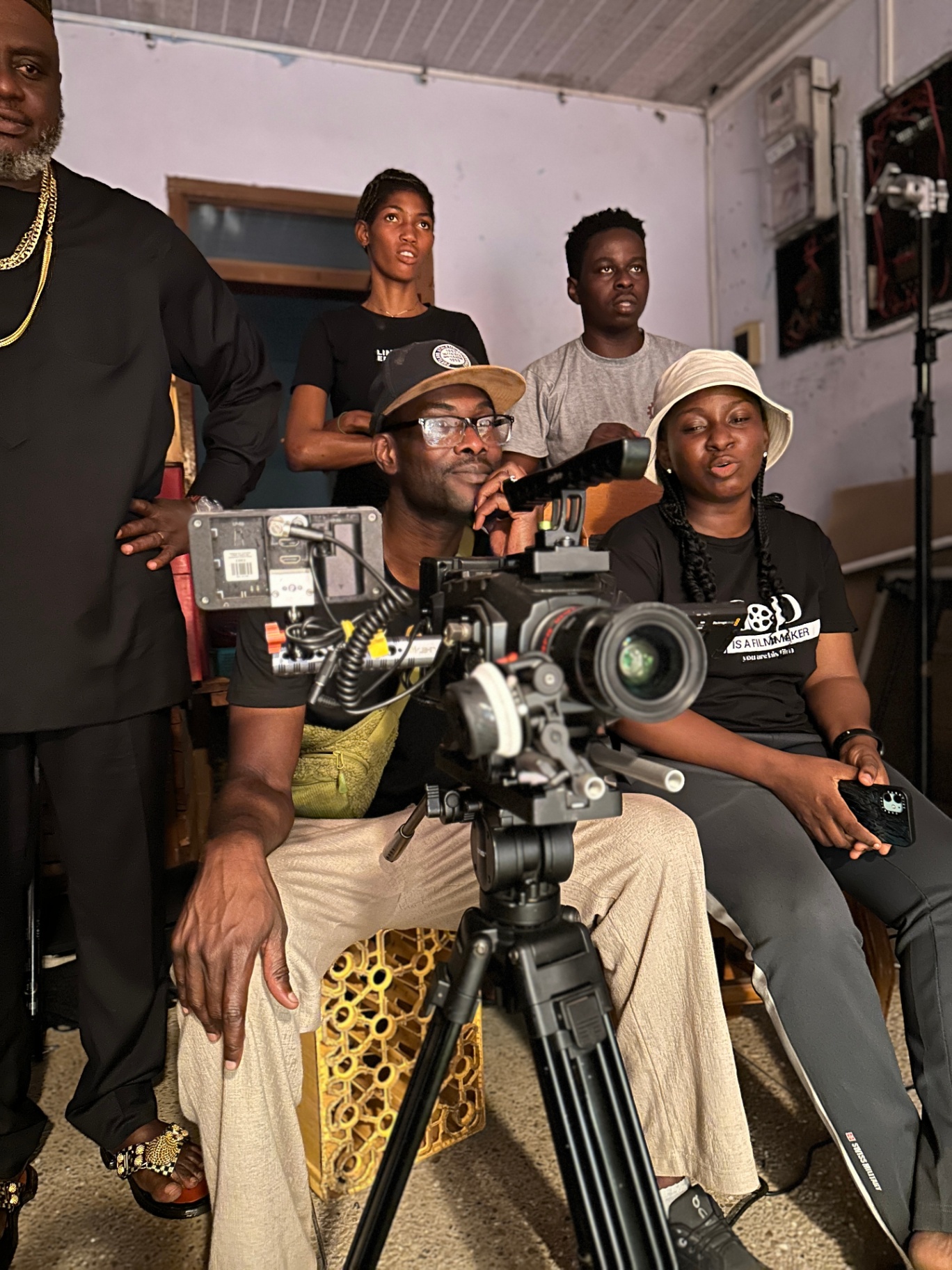
The Anibok Studios approach involves a deep discovery phase where we identify the "Human Core" of your firm. We don't just film lawyers; we capture the gravity of the justice they seek. This requires professional cinema cameras, intentional sound design, and, most importantly, a directorial eye that understands human psychology.
Conclusion: The Future belongs to the Authentic
As we move further into 2026, the firms that dominate will not be those with the largest AI-driven content engines. They will be the firms that doubled down on their humanity. High-empathy storytelling is not a marketing "tactic": it is a defensive moat.
In an era of synthetic media, the most radical thing a law firm can do is be real. By leveraging feature-level cinematic storytelling, your firm can transcend the noise of the digital marketplace and build a legacy based on the one thing technology cannot replicate: the power of a shared human experience.
To learn more about how we bridge the gap between cinematic film and corporate strategy, visit our blog or contact us directly to discuss your firm’s next "Anchor" film.